A Slow Guide to Negombo: The Lagoon, the Fort and the Beach
A slow guide to Negombo — the lagoon at dawn, the old Dutch fort and canal, St Mary's and the long west-coast beach, all a short bicycle ride from the villa.
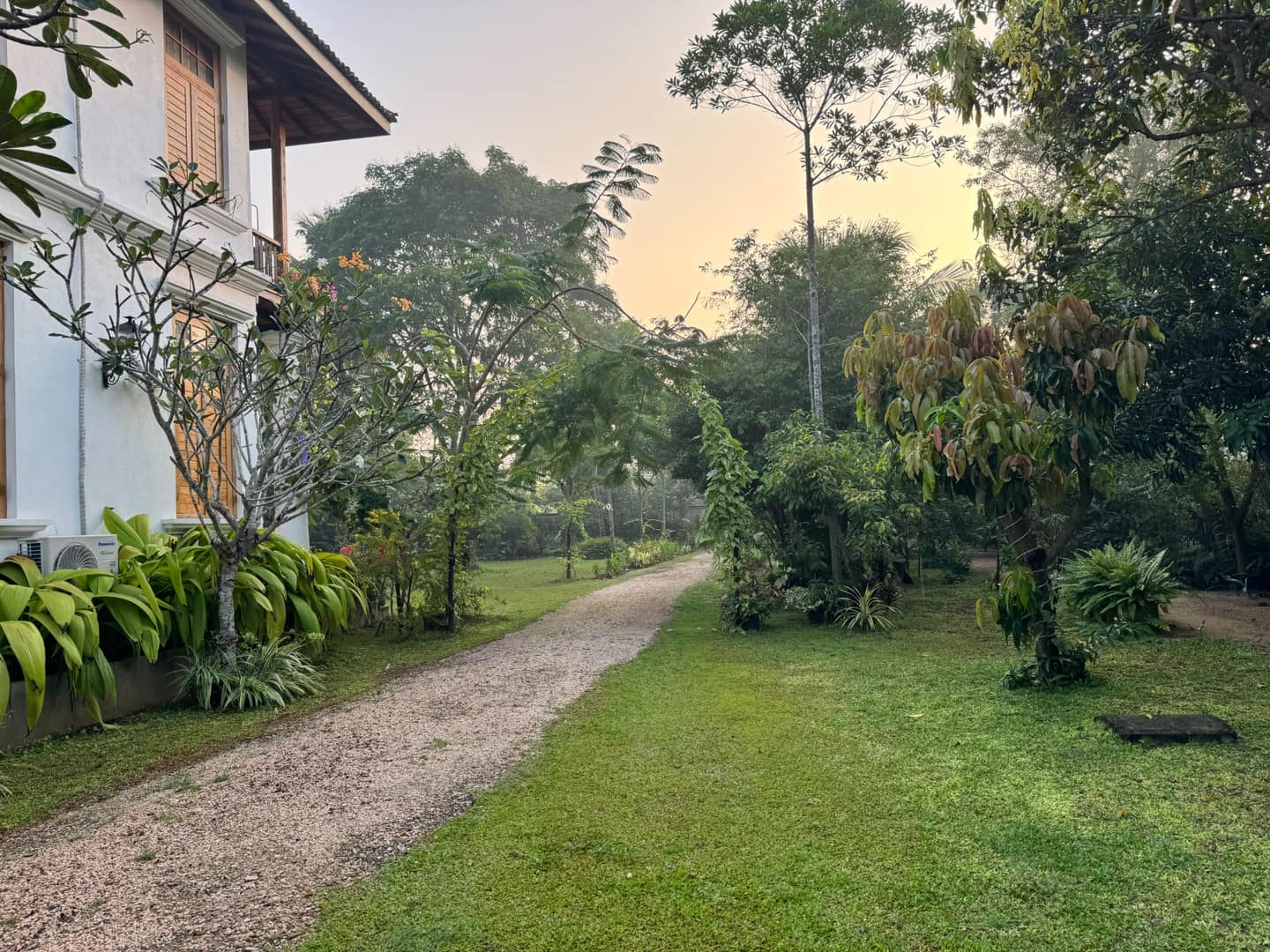
Most people meet Negombo for ten minutes, in a taxi, on the way somewhere else. It sits barely fifteen minutes from Bandaranaike International Airport, so it has always been the first or last stop in Sri Lanka — a place to sleep off a flight rather than to stay. We think that is a mistake. Given a day or two and a bicycle, Negombo is one of the gentlest introductions to the island the west coast has to offer.
Here is how we would spend it, at the pace the town deserves.
Dawn on the lagoon
The lagoon is the reason Negombo exists. For centuries its shallow brackish water has been fished by hand from oruwa — the slender outrigger canoes with a single triangular sail that still tilt across it at first light. Cycle down to the water before the heat arrives and you will see them coming in, low and heavy with the night’s catch.
The catch lands at the lellama, the fish market on the northern edge of town. It is loud, wet and entirely unstaged — crab and prawn and seer fish laid out on the sand, gulls overhead, the whole thing finished by mid-morning. Go to watch rather than to buy, and you will understand the rhythm the rest of the town keeps.
The Dutch leave their lines
Negombo was a cinnamon port, and everyone who wanted the cinnamon — the Portuguese, the Dutch, the British — left something behind. The most useful thing the Dutch left is the Hamilton Canal, cut in the colonial era to move goods down the coast toward Colombo. It still runs straight and quiet through town, and the towpath makes an easy, flat ride beneath the coconut palms.
A little further on are the worn ramparts of the old Dutch fort, and a gateway dated 1678. There is not a great deal left of it — Negombo wears its history lightly — but it anchors the old town, and the streets around it are the prettiest in Negombo: low tiled houses, a clock tower, the smell of bread and dried fish.
The bungalow itself belongs to this story. It is built in the Dutch-colonial style of these old houses, on ground the family has held since the 1870s — you can read more about that on our story.
”Little Rome”
Negombo is sometimes called Little Rome, for the density of Catholic churches the Portuguese left along this stretch of coast. The grandest is St Mary’s, a vast pale basilica whose painted ceiling is among the most beautiful in the country. Step inside at midday, when the heat is at its worst, and it is cool, dim and quietly extraordinary.
You do not have to be devout to find the churches worth the detour. They are the clearest mark the colonial centuries left on the place, and on a Sunday morning the whole town moves around them.
The long beach
Negombo’s beach is broad, golden and refreshingly ordinary — a working stretch of sand where fishermen mend nets in the morning and families walk in the cool of the evening, rather than a manicured resort strip. It is at its best at sundown, when the light goes amber and the oruwa are silhouetted against it. Walk north for solitude; stay south, nearer the lagoon mouth, for the seafood grills and easy bars that string along the shore after dark.
How to see it: by bicycle
Negombo is flat, compact and made for cycling. We keep bicycles at the bungalow for exactly this — the lagoon, the fish market, the fort and the beach are each a gentle ride from the gate, and you will see far more of the town from a saddle than from a tuk-tuk. A loose loop might run lagoon at dawn, breakfast back at the house, the canal and churches before the heat, and the beach at dusk. More on what is within reach is on our Negombo guide map.
A practical note on timing: the west coast’s driest, brightest months run roughly from December to April, though Negombo is pleasant to visit year-round and the bungalow is open in every season.
If you would like the town as a base rather than a layover, the whole estate — six bedrooms, the garden and the lap pool — is available to a single party. Write to us with your dates and we will tell you what the lagoon is doing that week.