Surf, Then Work: A Remote-Working Base in Sri Lanka
A base for surfers who work remotely in Sri Lanka — the two-season surf calendar, the new digital nomad visa, the waves within reach, and a villa built for focus.
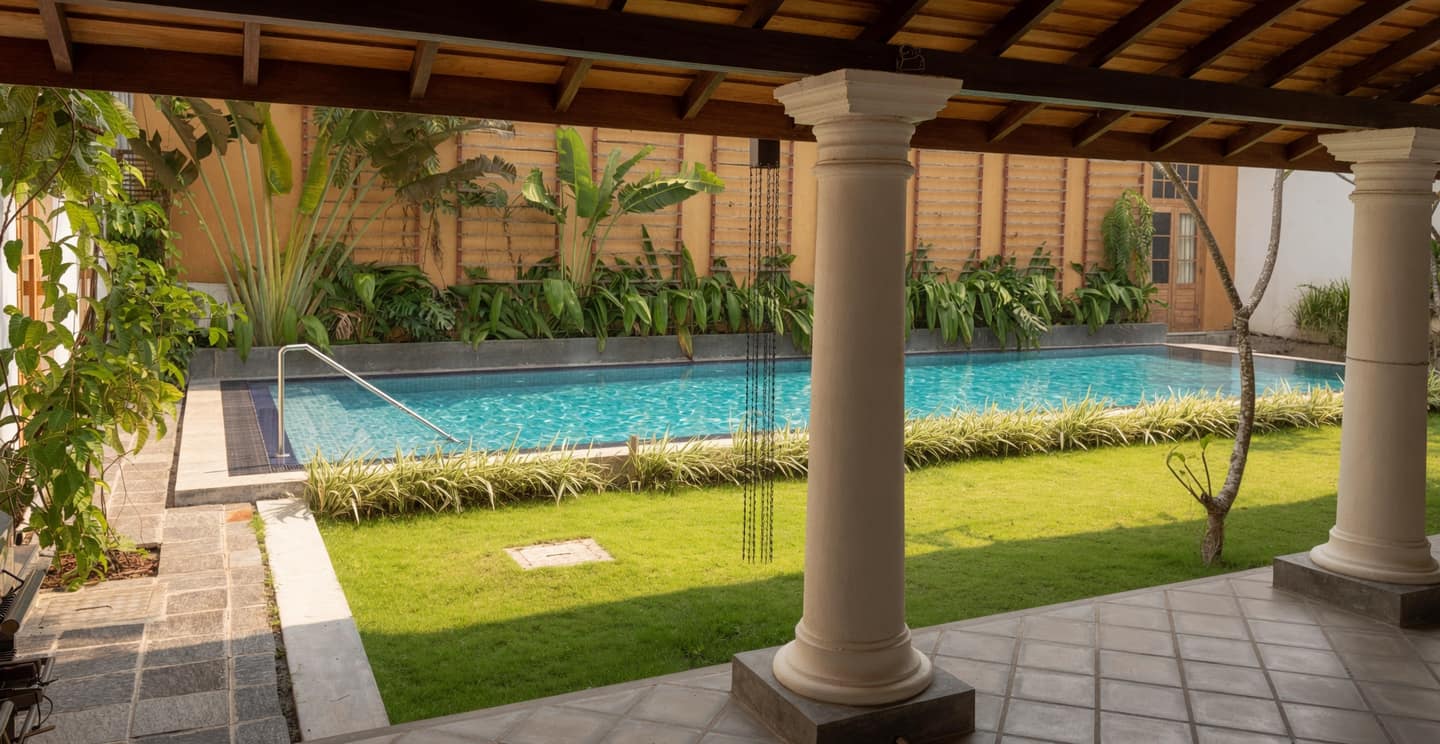
There is a particular kind of week that the laptop and the surfboard have made possible: dawn in the water, the rest of the morning at a desk, the afternoon call taken with salt still in your hair. Sri Lanka is one of the best places in the world to live that week — warm, cheap by European standards, on a workable time zone for both Europe and Asia, and ringed by waves. What it lacks, mostly, is somewhere calm enough to actually get the work done.
That is the gap a private house fills. Here is how we would think about basing a remote-working surf trip on the west coast — and why the quiet matters as much as the swell.
Two coasts, two seasons
The single most useful thing to understand about surfing Sri Lanka is that it has two seasons on two coasts, which between them keep a rideable wave somewhere on the island for most of the year.
- The south and west coasts are at their best roughly from November to April — the dry, bright half of the year down there, and the season most travelling surfers come for.
- The east coast, around Arugam Bay, flips the other way: roughly May to September, when the south goes blown-out and wet.
For a holiday this is a footnote. For someone staying weeks or months to work, it is the whole point — you can settle in, find a rhythm, and simply follow the season from one coast to the other without leaving the country or your routine.
The visa that makes a long stay possible
For years the honest answer to “can I just stay and work?” was “not really” — you came on a tourist visa and stretched it. That changed in early 2026, when Sri Lanka launched a digital nomad visa aimed squarely at remote workers.
As it stands in mid-2026, the broad shape is a twelve-month visa, renewable yearly, for people whose income comes from outside Sri Lanka — employed by a foreign company, freelancing, or running a business that is not registered here. The headline requirement has been a minimum income of around US$2,000 a month (with documentary proof, and a little more for larger families), submitted online to the Department of Immigration & Emigration’s Residence Visa Division along with the usual paperwork — a passport with six months’ validity, police and medical clearances, and health insurance valid in Sri Lanka. Holders may open a local bank account and use co-working spaces, and there has been talk through 2026 of softening the terms — a lower income floor and a longer multi-year option — to draw more remote workers in.
Two caveats, said plainly. First, the scheme is new and the figures are still moving, so treat the numbers above as a starting point rather than gospel and confirm the current terms with the official Department of Immigration & Emigration before you book flights. Second, if you are only here for a few weeks, you need none of this — the ordinary tourist visa covers a short surf-and-work stint perfectly well.
Where the waves actually are
An honest word, because it shapes everything: Negombo, where we are, is not itself a surf town. Its long beach is for a swim and a sunset paddle, not for chasing a wave. What Negombo is is the calm, connected base — fifteen minutes from Bandaranaike International Airport, and a straight run to the breaks.
The south-coast surf belt — Weligama, Midigama, Ahangama, Hikkaduwa — sits around three hours away down the southern expressway: close enough for a weekend, or a few days at the start of a stay to remind your body what it is doing. Weligama’s mellow beach break is as forgiving an introduction as the island has; the reefs further along reward people who already know what they want. Arugam Bay, on the east, is a longer haul — better treated as a proper trip than a weekend run, and best in the opposite season.
Boards are easy to rent or buy on the south coast, so there is no need to travel with one. If you want a steer on where to point yourself for your dates, that is exactly the sort of thing we are happy to help with — and our slow guide to Negombo covers what is on the doorstep here for the days you are not driving south.
A place built for focus
The reason to take a whole house rather than a bed in a surf hostel is simple: you have come to work, and work needs quiet. The bungalow is two acres of walled garden with six bedrooms — room enough for a small team to each have their own door, and corners of the verandah and garden to set up in. Between calls there is the lap pool, the yoga pavilion and the bicycles; around it, the unhurried pace that the rest of Negombo keeps. The whole estate is solar-powered and given to one party at a time, so there is no front desk, no other guests, and no one to work around.
The one specific worth raising before you book: connectivity. Reliable internet is non-negotiable for remote work, so tell us what yours needs to look like — video calls all day, large uploads, a particular uptime — and we will be straight with you about whether the house is right for it. We would rather lose the booking than have you arrive to a connection that cannot carry your day.
The rhythm of a week
It tends to settle into something like this. You land, and you are at the house within the hour. The first weekend you drive south and surf until your shoulders complain, then come back to the garden to recover. The working week finds its shape — early swim or a session if there is something local worth it, deep work through the cool of the morning, the pool and the shade when the heat peaks, calls in the afternoon as Europe wakes. Bicycles to the fish market or the old town when you need to leave the desk. And, every week or two, the drive back down the coast for the real thing.
It is not a holiday and it is not the office. It is the thing in between that a warm island and a quiet house make possible — and, done from a base like this, it is far more productive than it has any right to be.
The whole estate takes one party at a time, which makes it a natural fit for a small remote-working crew. Tell us your dates, your numbers and what your work needs — including the connection — and we will tell you honestly whether it is the right base for your stay.
This article is general information, not immigration, legal or financial advice. Visa rules and local laws change — always check the current requirements with official sources before you travel. Last reviewed: June 2026.
← All journal entries